










Buyer's Guide
About Tahitian Pearls

Why Kamoka Pearls
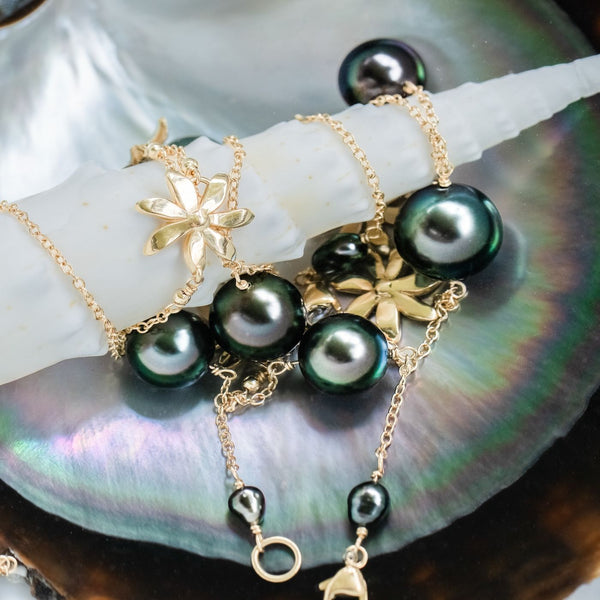
Every pearl on our site comes from the depths of Ahe's lagoon, cultivated by our own family or team from the moment the oyster was placed in the water to the moment it left Bend, Oregon on its way to you. That's not a claim we make lightly — it's the actual, traceable path every single piece takes, and it's rare in an industry where most retailers have no idea where their pearls really came from.
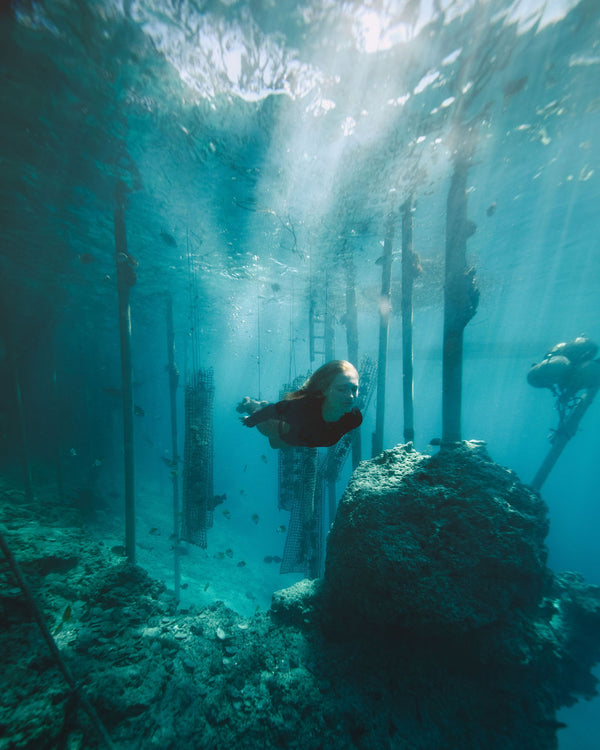
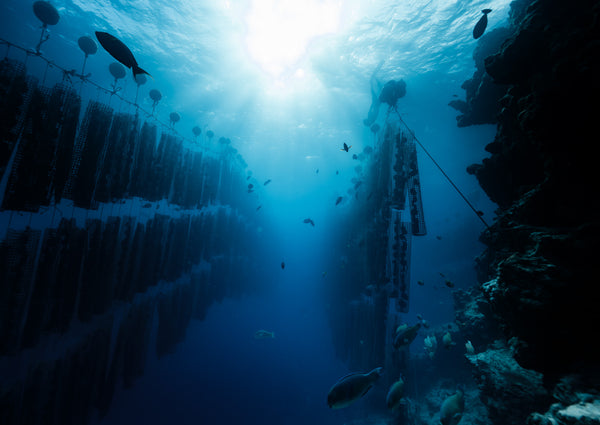
We've farmed and branded ourselves as a sustainable pearl company for over twenty years — long before sustainability was something jewelry brands felt they needed to say. That head start shows in the pearls themselves: independent testing has confirmed our own-byproduct nuclei produce triple the number of high-quality pearls compared to imported shell, and our farming methods have been documented by National Geographic for actually increasing fish populations around our farm, not depleting them.
Being based in the U.S. means we can ship worldwide with speed most overseas farms can't match, without ever losing the thread back to Ahe. When you buy from Kamoka, you're not buying from a reseller who bought from a broker who bought from a farm they've never seen. You're buying from the family — and the team of local grafters and divers — who grew it.

Pearl Basics
A treasure beneath the surface. Here's what to know before you choose one.
-
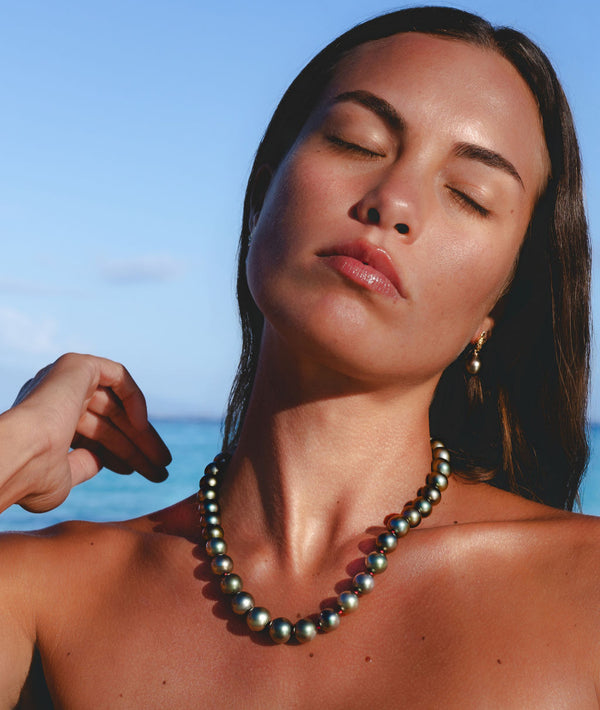
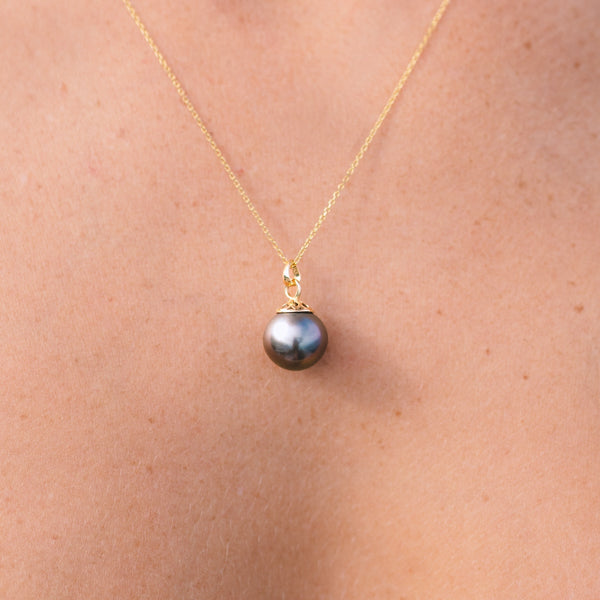
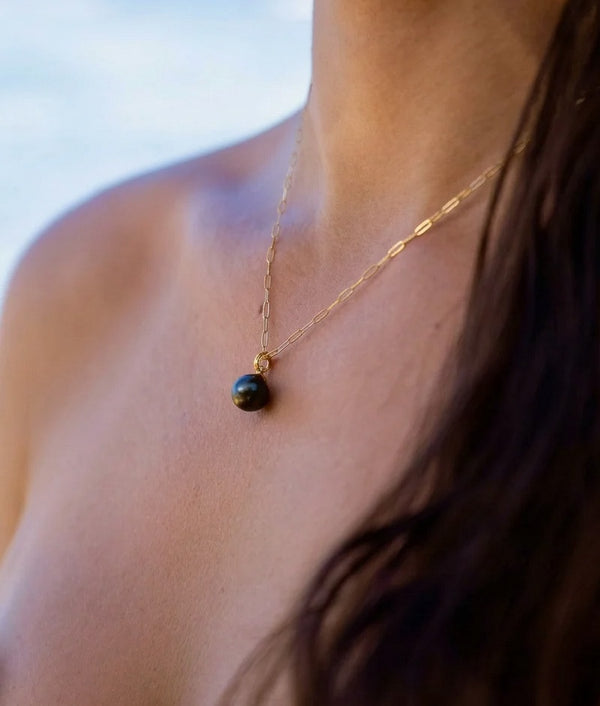
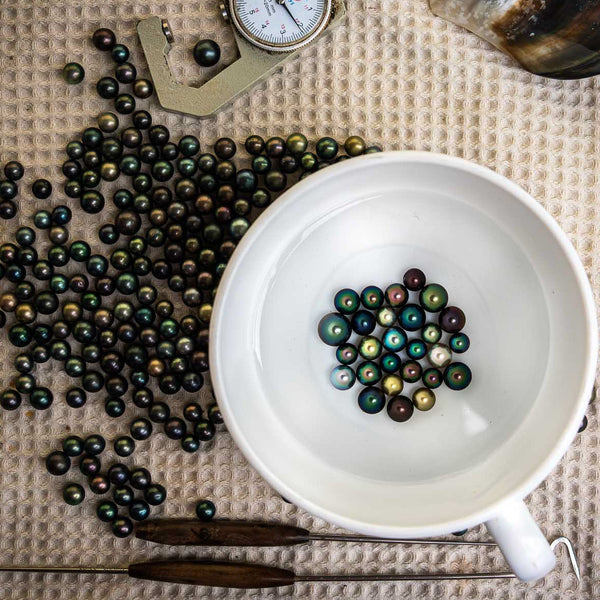
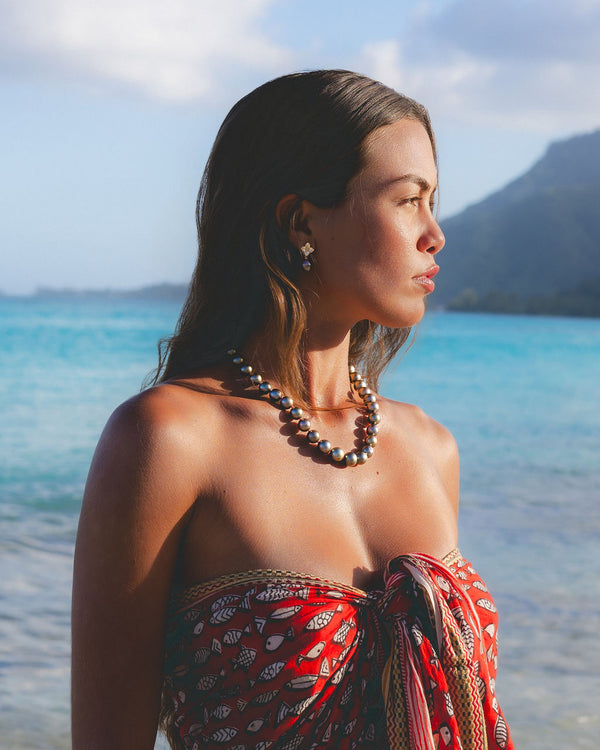
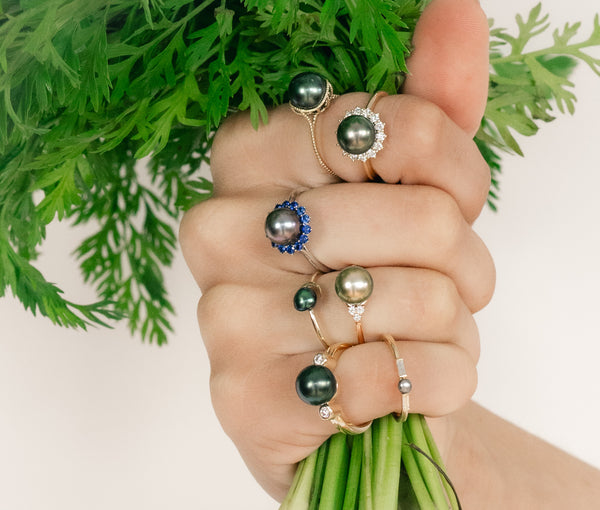
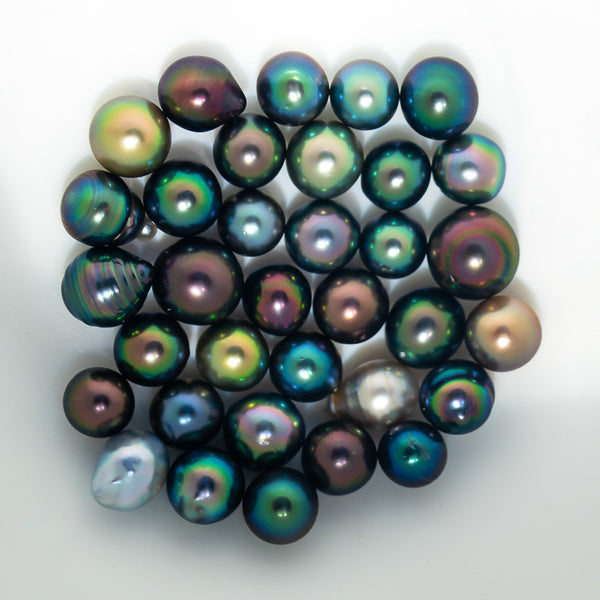
Tahitian pearls are sometimes called "black pearls," but their natural colors actually range from white to darkest midnight, with the full spectrum in between.
-
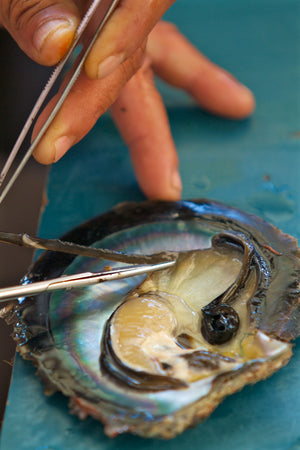
That color comes naturally from the shell of the Pinctada margaritifera oyster — it isn't dyed or treated.
-
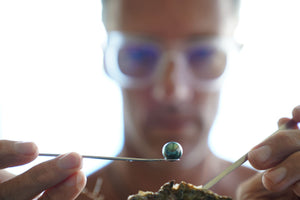
Nearly all Tahitian pearls are cultured, meaning a technician inserts a nucleus into an oyster in a process called grafting.
-
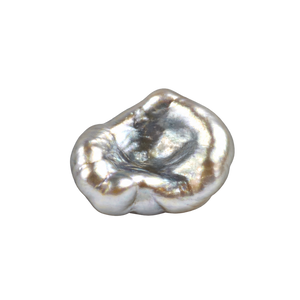
Keshi pearls are non-nucleated — they form from a failed graft, without a nucleus at their core.
-
2–8mm 8–12mm 20mm+ Average size runs 8 to 12mm, and keshi pearls from 2 to 8mm. Value increases with size, which can reach over 20mm.
-
25%
Tahitian pearls occur in a range of shapes. Round pearls make up only about 25% of any harvest, industry-wide — true keshi pearls are rarely perfectly round.
-
CircledSemi-baroqueRound · Drop
Round and drop shapes are the most valuable; circled (ringed) pearls are the most affordable. Semi-baroque shapes, with a single axis of symmetry, fall in between.
-
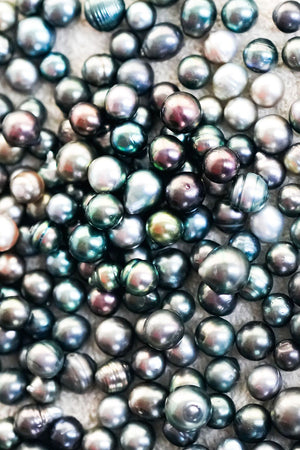
Luster — a deep shine that can look like staring into still water — is one of the most prized qualities in a Tahitian pearl, and a major factor in its value.
-
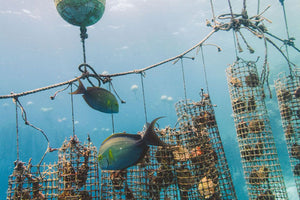
Each harvest offers a chance to begin again. Whenever possible, we re-graft the oyster with a new nucleus and return it to the lagoon to continue to grow.

Shapes
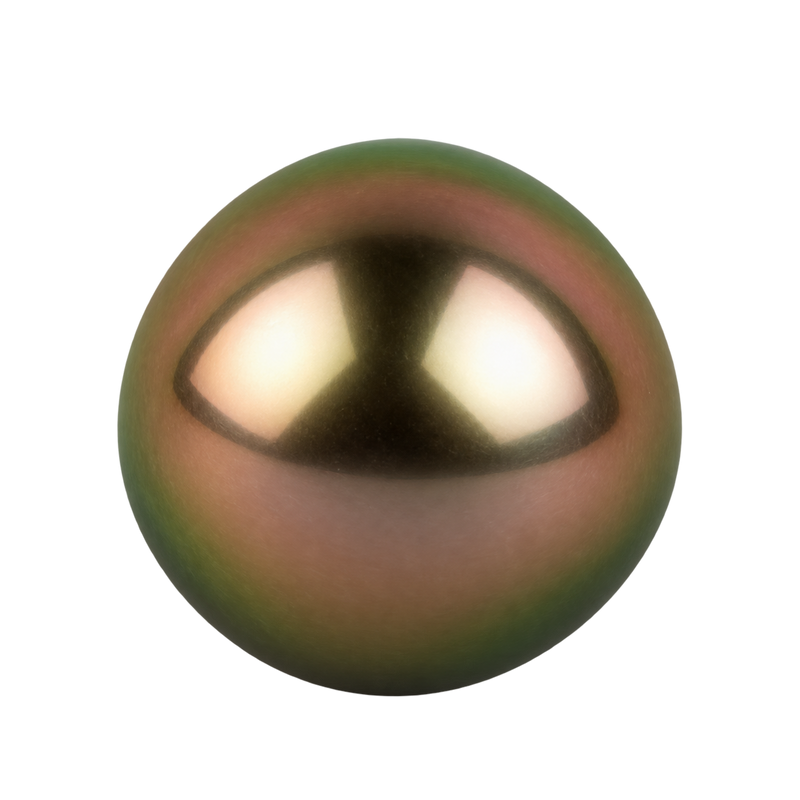
Round
Spherical and beautifully balanced, round pearls are prized for their symmetry and make up only about 25% of a typical harvest.

Semi-Baroque
Gently oval, elongated, or slightly uneven, semi-baroque pearls offer a soft variation on the classic round shape.
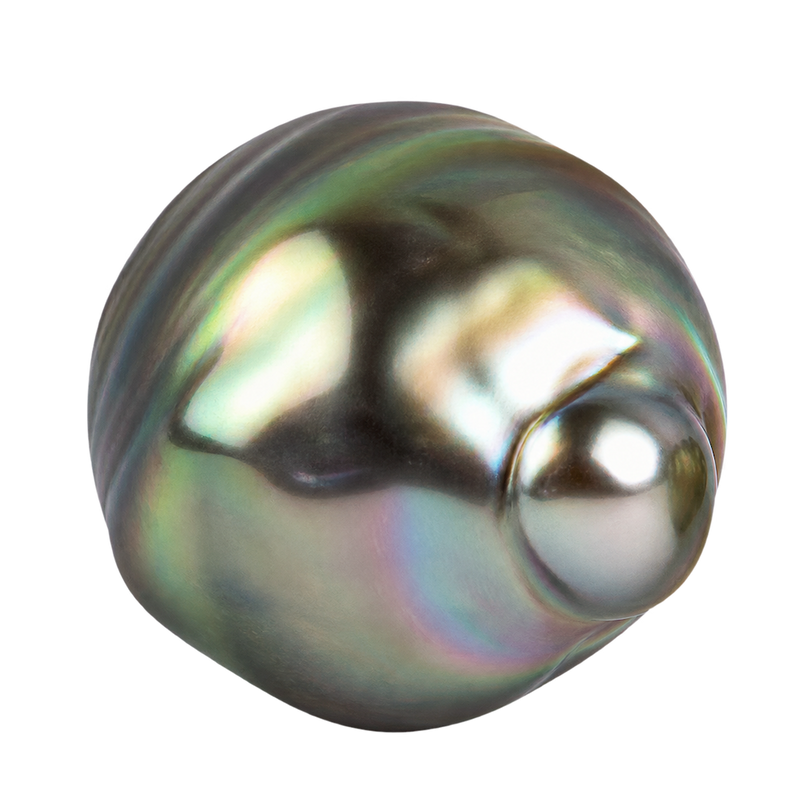
Baroque
Naturally irregular and sculptural, baroque pearls have distinctive contours that make each one unique.
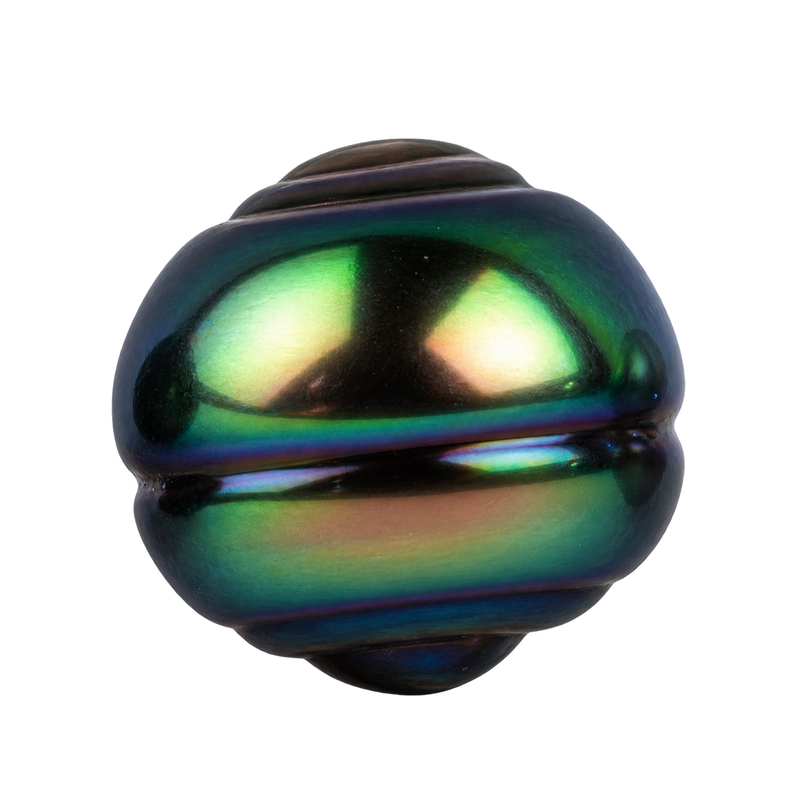
Circled
Defined by natural rings and grooves around the surface, circled pearls have a bold texture and individual character.
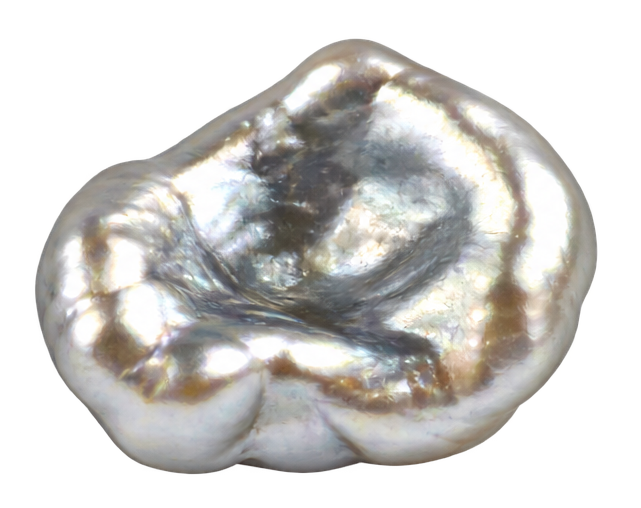
Keshi
Formed without a bead nucleus, keshi pearls are composed entirely of nacre, with organic shapes, fun colors, and exceptional luster.

Colors & Luster
Far from ordinary.
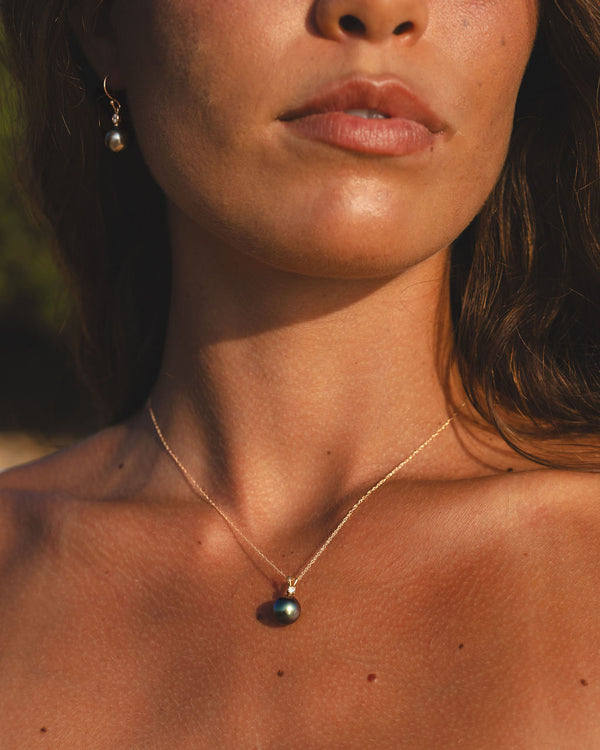
Unlike white Akoya or freshwater pearls, Tahitian pearls occur naturally across a full spectrum — peacock green, aubergine, blue-grey, gold, silver, and true black. No other pearl in the world offers this range.
Luster, separate from color, is the depth and quality of the shine itself — the closest comparison is looking into still, deep water. A pearl can have beautiful color and still lack strong luster, or vice versa; the finest Tahitian pearls have both.

Grading
A Tahitian pearl's grade comes down to four things: luster, surface quality, shape, and color — with surface quality carrying the most weight. The industry standard runs on an A-through-D scale, based on the percentage of a pearl's surface that's free of blemishes.
A higher grade doesn't automatically mean a more beautiful pearl to every eye — a B-grade pearl with striking color or exceptional luster can be more captivating than a technically higher-graded one that's simply clean and unremarkable. Grade is a useful, objective starting point for comparing value — not the only thing worth caring about when you're choosing a pearl you'll actually wear.

Years in the making. Yours to wear.

History of Tahitian Pearls
Tahitian pearl farming began in the 1960s in French Polynesia's Tuamotu Archipelago, but the region's relationship with pearls goes back much further — for generations, islanders dove for wild pearl oysters, often under brutal conditions imposed by colonial trading interests, with little of the resulting wealth ever staying local.
The industry as it exists today took shape in the 1980s, when a Polynesian entrepreneur named Robert Wan scaled commercial pearl farming dramatically, eventually producing over a million pearls a year and helping establish Tahitian pearls as a recognized global luxury good. Around that same time, smaller family farms began appearing across the Tuamotus, drawn by the same opportunity. Kamoka was one of them, founded on the atoll of Ahe in 1991.
What started as a local trade shaped by exploitation has become, in the decades since, an industry capable of supporting family farms built on very different values — ours included.


Tahitian pearls from our family farm in French Polynesia, since 1991.
Questions about a pearl, a setting or a gift? Email our jewelers.
